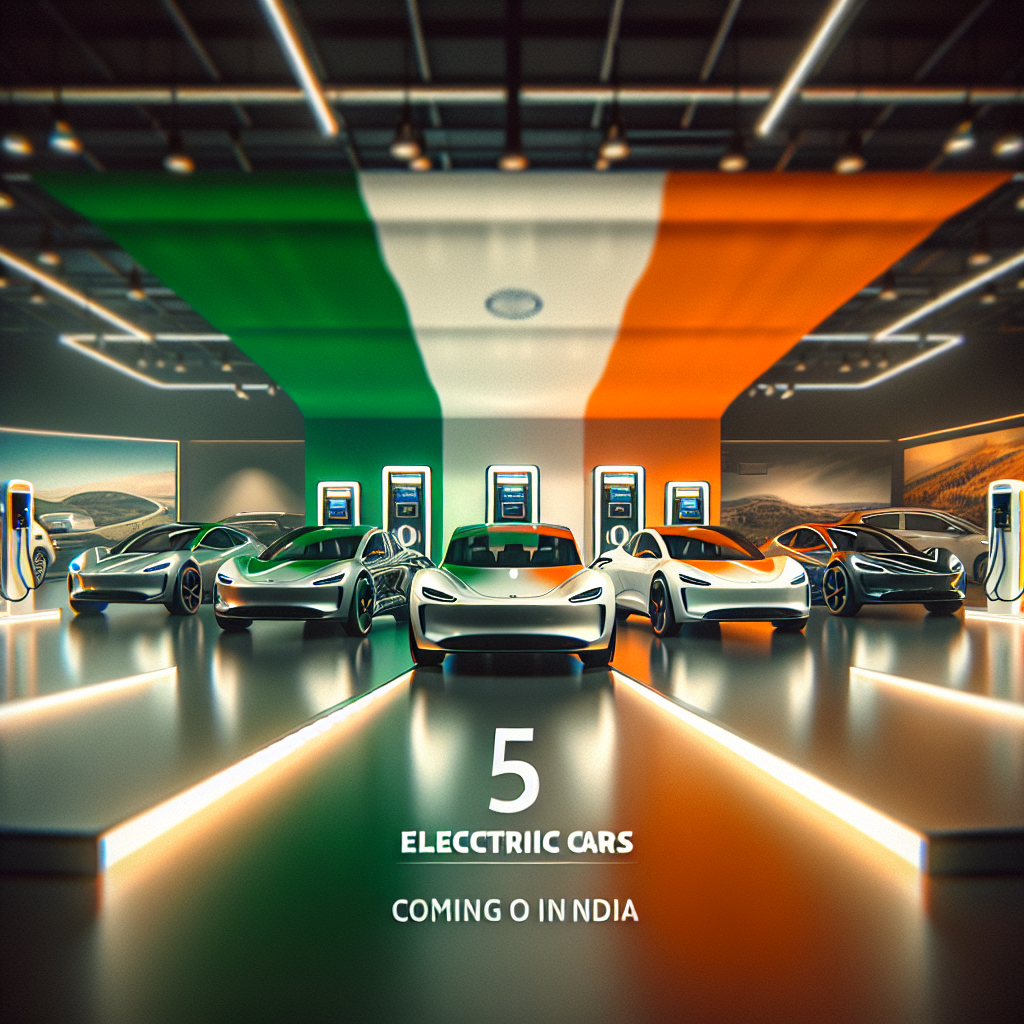
Top 5 Electric Cars Coming to India in 2026: Launch Dates, Price & Features
India’s electric vehicle revolution is accelerating faster than ever, and 2026 is set to be a landmark year for EV enthusiasts. With the government’s strong push for electric mobility and improving charging infrastructure, several global and domestic automakers are preparing to launch their most exciting electric cars in India. Whether you’re planning to buy your first EV or upgrade from your current vehicle, this comprehensive guide covers the top 5 electric cars launching in India in 2026.
Why 2026 is a Game-Changer for EVs in India
Before we dive into the specific models, it’s important to understand why 2026 will be such a crucial year for electric vehicles in India:

- Enhanced FAME subsidies making EVs more affordable
- Rapid expansion of charging infrastructure across major cities
- New battery technology offering better range and faster charging
- Competitive pricing as more manufacturers enter the market
- Improved after-sales support and service networks
Let’s explore the five most anticipated electric cars that will transform Indian roads in 2026.
1. Tata Curvv EV: India’s Electric Coupe-SUV Revolution

Expected Launch Date: January 2026
Expected Price Range: ₹18-25 Lakhs (Ex-showroom)
The Tata Curvv EV is perhaps the most anticipated electric vehicle launch of 2026. Tata Motors has already created massive buzz with its coupe-SUV design that blends sporty aesthetics with practical SUV functionality.
Key Features:
- Battery Options: 45 kWh and 55 kWh battery packs
- Range: Up to 500 km on a single charge (MIDC)
- Charging: DC fast charging support (10-80% in 40 minutes)
- Motor Power: 150-200 HP electric motor options
- Design: Sleek coupe-SUV styling with aggressive LED lighting
- Technology: 12.3-inch touchscreen, connected car features, Level 2 ADAS
Why You Should Consider It:
The Curvv EV will be India’s first mass-market electric coupe-SUV, offering a unique blend of style and substance. Tata’s proven track record with the Nexon EV and Punch EV gives buyers confidence in reliability and after-sales support.

Tata Motors has confirmed that the Curvv EV will feature cutting-edge battery technology sourced from its collaboration with global battery manufacturers. The vehicle will also benefit from Tata’s extensive service network across India, making it easier to maintain compared to some international brands.
Expected Variants:
- Curvv EV Smart – Base variant with standard features
- Curvv EV Pure – Mid-level variant with enhanced comfort
- Curvv EV Creative – Top variant with all premium features
- Curvv EV Accomplished – Flagship with ADAS and premium interiors
Official Source: Tata Motors

2. MG Windsor EV: British Engineering Meets Indian Value
Expected Launch Date: March 2026
Expected Price Range: ₹20-28 Lakhs (Ex-showroom)
MG Motor India has been a game-changer in the electric vehicle segment with the ZS EV, and the MG Windsor EV promises to take things to the next level. This premium electric SUV is designed specifically for the Indian market while incorporating global design and technology standards.
Key Features:
- Battery Capacity: 61 kWh lithium-ion battery pack
- Range: 550+ km (MIDC certified)
- Fast Charging: 50 kW DC fast charging capability
- Performance: 190 HP motor with instant torque delivery
- Interior: Premium cabin with ventilated seats and panoramic sunroof
- Safety: 6 airbags, 360-degree camera, ADAS Level 2
Technology Highlights:
The Windsor EV will feature MG’s latest i-SMART technology suite, including:
- Voice-activated controls in Hindi and English
- Over-the-air (OTA) software updates
- Remote vehicle control via smartphone app
- AI-powered driver assistance systems
- Wireless Apple CarPlay and Android Auto
Why It Stands Out:
MG has built a reputation for offering feature-rich vehicles at competitive prices. The Windsor EV is expected to continue this tradition while addressing the range anxiety that often concerns Indian EV buyers. The company’s partnership with Tata Power for charging infrastructure also means Windsor EV owners will have access to one of India’s largest charging networks.
Official Source: MG Motor India
3. BYD Seal: Premium Electric Sedan Excellence
Expected Launch Date: May 2026
Expected Price Range: ₹40-50 Lakhs (Ex-showroom)
Chinese automotive giant BYD has already made waves in India with the Atto 3, and the BYD Seal electric sedan promises to redefine the premium EV segment. This sleek sedan combines cutting-edge battery technology with luxurious features that rival traditional premium sedans.
Key Specifications:
- Battery Technology: BYD Blade Battery (75.36 kWh)
- Range: 650 km (WLTP) / 550+ km (Real-world India)
- Power Output: Dual motor AWD with 530 HP (Performance variant)
- Acceleration: 0-100 km/h in 3.8 seconds (Performance model)
- Charging Speed: 150 kW DC fast charging (30-80% in 26 minutes)
Premium Features:
- Heat pump technology for better range in all weather conditions
- Adaptive air suspension for superior ride comfort
- 15.6-inch rotating touchscreen infotainment
- Premium 12-speaker Dynaudio sound system
- Full leather interiors with heating and cooling
- Advanced driver assistance with highway pilot
Battery Technology Advantage:
BYD’s proprietary Blade Battery technology offers several advantages:
- Better Safety: Nail penetration test passed without fire or explosion
- Longer Lifespan: Over 3,000 charge cycles with minimal degradation
- Space Efficiency: More interior room due to compact battery design
- Thermal Management: Superior performance in Indian climate conditions
The BYD Seal directly competes with premium sedans like the BMW 3 Series and Mercedes C-Class but offers significantly lower running costs and zero emissions.
Official Source: BYD India
4. Hyundai Ioniq 5: The Future of Electric Mobility
Expected Launch Date: July 2026
Expected Price Range: ₹45-60 Lakhs (Ex-showroom)
The Hyundai Ioniq 5 has won multiple international awards for its revolutionary design and technology. After successful launches in global markets, this futuristic electric crossover is finally making its way to India in 2026.
Outstanding Features:
- Platform: E-GMP dedicated EV platform
- Battery Options: 72.6 kWh long-range battery
- Range: 631 km (WLTP) / 520+ km (Real-world)
- Unique Design: Retro-futuristic styling with pixel LED lights
- Ultra-Fast Charging: 800V architecture enables 10-80% charge in 18 minutes
- V2L Technology: Use your car to power external devices up to 3.6 kW
Interior Innovation:
The Ioniq 5’s cabin is unlike any other car in India:
- Sliding center console that can move up to 140mm
- Fully reclining front seats with leg rest
- Augmented reality head-up display
- Eco-friendly materials made from recycled plastics
- Solar roof panel (optional) for extended range
- Spacious 2,900mm wheelbase providing SUV-like space
Technology Leadership:
Hyundai’s commitment to advanced technology is evident in the Ioniq 5:
- Remote Smart Parking Assist: Park your car from outside
- Highway Driving Assist 2: Advanced semi-autonomous driving
- Blind-Spot View Monitor: Camera feed directly in digital cluster
- Smart digital key: Use your smartphone as a car key
The Ioniq 5 represents Hyundai’s vision for the future of mobility, combining cutting-edge technology with sustainable materials and innovative design.
Official Source: Hyundai India
5. Maruti Suzuki eVX: India’s Most Affordable Electric SUV
Expected Launch Date: October 2026
Expected Price Range: ₹12-18 Lakhs (Ex-showroom)
India’s largest carmaker is entering the electric vehicle space with the Maruti Suzuki eVX, and it promises to be a game-changer for mass-market EV adoption. Built on the same platform as Toyota’s upcoming EV, the eVX aims to make electric mobility accessible to millions of Indian families.
Key Highlights:
- Battery Capacity: 48 kWh and 60 kWh options
- Range: 400-550 km depending on variant
- Powertrain: Front-wheel-drive electric motor
- Size: Compact SUV comparable to Grand Vitara
- Charging: AC and DC fast charging support
- Price Strategy: Most affordable electric SUV in its segment
Mass Market Appeal:
What makes the eVX special for Indian buyers:
- Maruti’s Extensive Service Network: Over 3,000+ service centers
- Affordable Maintenance: Lower cost of ownership compared to competitors
- Familiar Design: SUV styling that appeals to Indian preferences
- Practical Features: Focus on essential features rather than luxury extras
- Resale Value: Strong brand value ensures better resale
Strategic Importance:
The eVX is crucial for India’s EV adoption because:
- Price Point: At ₹12-18 lakhs, it’s priced similar to popular diesel SUVs
- Trust Factor: Maruti’s 40+ year legacy in India builds buyer confidence
- Volume Play: Maruti’s manufacturing scale could bring down EV costs
- Infrastructure Support: Partnership with charging network providers
- Finance Options: Easy financing through Maruti Suzuki Finance
Maruti has announced that the eVX will be manufactured in India with significant localization, helping keep costs competitive. The company is also working on developing a separate EV service infrastructure to support the growing electric vehicle portfolio.
Official Source: Maruti Suzuki
Quick Comparison Table: All 5 EVs at a Glance
| Feature | Tata Curvv EV | MG Windsor EV | BYD Seal | Hyundai Ioniq 5 | Maruti eVX |
|---|---|---|---|---|---|
| Expected Price | ₹18-25L | ₹20-28L | ₹40-50L | ₹45-60L | ₹12-18L |
| Launch Month | Jan 2026 | Mar 2026 | May 2026 | Jul 2026 | Oct 2026 |
| Range (km) | 500 | 550+ | 650 | 631 | 400-550 |
| Battery (kWh) | 45-55 | 61 | 75.36 | 72.6 | 48-60 |
| Charging Speed | Fast | Standard | Ultra-Fast | Ultra-Fast | Standard |
| Segment | Mid-Range | Premium | Luxury | Luxury | Affordable |
| Best For | Style & Value | Features | Performance | Technology | Budget-Conscious |
EV Charging Infrastructure in India: Are We Ready?
One of the biggest concerns for potential EV buyers is charging infrastructure. Here’s the good news for 2026:
Current Status:
- 7,000+ public charging stations across India (as of December 2025)
- Major cities covered: Delhi-NCR, Mumbai, Bangalore, Pune, Hyderabad, Chennai
- Highway corridors: Delhi-Jaipur, Mumbai-Pune, Bangalore-Chennai increasingly covered
2026 Projections:
- 15,000+ public charging stations expected by end of 2026
- Fast charging networks by Tata Power, Adani Total Gas, ChargeZone
- Home charging solutions becoming more affordable and accessible
- Smart charging apps to locate nearest charging points
For more details on charging infrastructure, check out our comprehensive guide on EV charging stations in major Indian cities.
Government Incentives and Subsidies for EVs in 2026
The Indian government continues to support EV adoption through various schemes:
FAME II Scheme Benefits:
- Subsidy amount: Up to ₹1.5 lakhs on electric cars
- State subsidies: Additional ₹50,000 to ₹1 lakh in states like Delhi, Maharashtra, Gujarat
- Road tax exemption: In most states
- Registration fee waiver: In several states
- Lower GST: 5% vs 28% on conventional vehicles
Additional Benefits:
- Lower insurance premiums: 15-20% less than ICE vehicles
- Corporate tax benefits: For businesses purchasing EVs
- Priority parking: In many metropolitan areas
- Toll exemptions: In select states and cities
Note: Subsidies and benefits vary by state. Always check your local state EV policy for exact benefits.
Should You Wait for 2026 or Buy an EV Now?
This is a common question among prospective EV buyers. Here’s our honest assessment:
Buy Now If:
- ✅ You need a vehicle urgently
- ✅ Current EV models meet your requirements
- ✅ You want to take advantage of existing subsidies (which may reduce)
- ✅ You have access to home or workplace charging
- ✅ Models like Tata Nexon EV or MG ZS EV suit your needs
Wait for 2026 If:
- ⏳ You want the latest technology and features
- ⏳ Better range (500+ km) is crucial for you
- ⏳ You can manage with your current vehicle
- ⏳ Ultra-fast charging (800V) is important
- ⏳ You want more variety and options
Our Recommendation:
If your daily commute is under 100 km and you have home charging, current EVs like the Tata Nexon EV or Punch EV offer excellent value. However, if you frequently travel long distances or want cutting-edge technology, waiting for these 2026 models makes sense.
Electric Vehicle Ownership Costs: The Real Picture
Beyond the purchase price, here’s what you need to know about owning an EV:
Running Costs (Approximate per month for 1,500 km):
- Electricity: ₹1,200-1,800 (vs ₹8,000-10,000 for petrol)
- Maintenance: ₹500-800 (vs ₹2,000-3,000 for ICE)
- Insurance: Similar to ICE vehicles initially
- Total Savings: ₹6,000-8,000 per month
5-Year Total Cost of Ownership:
Even with a higher initial price, EVs typically break even within 3-4 years due to:
- Lower fuel costs (₹2-3 per km vs ₹8-10 per km)
- Minimal maintenance (no engine oil, fewer moving parts)
- Longer service intervals
- Government incentives
For a detailed cost comparison, check our EV vs Petrol car cost calculator.
Common Myths About Electric Cars: Busted!
Let’s address some persistent misconceptions:
Myth 1: "EVs are not suitable for Indian roads"
Reality: Modern EVs have the same or better ground clearance as regular cars. The Mahindra XUV 7XO and Tata Nexon EV handle Indian roads excellently.
Myth 2: "Battery replacement is too expensive"
Reality: Most EV batteries come with 8-year/1.6 lakh km warranty. Battery technology is improving rapidly, and costs are dropping 20% year-over-year.
Myth 3: "Charging takes too long"
Reality: With DC fast charging, most EVs charge 10-80% in 30-45 minutes. Plus, you charge overnight at home like your smartphone.
Myth 4: "EVs catch fire easily"
Reality: EVs have lower fire incidents than petrol/diesel vehicles. Modern battery management systems are extremely safe.
Myth 5: "Resale value is poor"
Reality: While still developing, EV resale values are improving. Tata and MG offer buyback guarantees in some cases.
How to Prepare for Your First EV Purchase
If you’re planning to buy one of these electric cars in 2026, start preparing now:
1. Home Charging Setup:
- Check if your parking has electrical connection
- Calculate power requirement (3-7 kW charger)
- Budget ₹15,000-30,000 for home charger installation
2. Test Drive Current EVs:
- Visit dealerships and test drive existing models
- Understand EV driving dynamics and regenerative braking
- Experience the instant torque and smooth acceleration
3. Route Planning:
- Identify charging stations on your regular routes
- Download apps like PlugShare, ChargeZone, Tata Power EZ Charge
- Plan for longer trips with charging stops
4. Financial Planning:
- Research available loans and EMI options
- Calculate total cost of ownership vs your current vehicle
- Factor in government subsidies and tax benefits
- Consider trade-in value of your existing car
5. Stay Informed:
- Follow automotive news for launch updates
- Join EV communities and forums
- Subscribe to manufacturer newsletters
- Watch our website for detailed reviews and comparisons
Frequently Asked Questions (FAQs)
1. What is the expected waiting period for these EVs after launch?
Answer: Based on current EV demand patterns, expect 2-6 months waiting period depending on the model. Premium EVs like BYD Seal and Hyundai Ioniq 5 may have shorter waits due to limited volumes, while mass-market models like Maruti eVX might have longer waiting periods due to higher demand.
2. Can I install a home charger in my apartment complex?
Answer: Yes, but you need permission from your housing society. Many new residential complexes are now EV-ready. You’ll need a dedicated parking spot with electrical access. The installation cost is typically ₹15,000-30,000 for a 3.3 kW AC charger.
3. How does cold weather affect EV range in North India?
Answer: EVs can lose 10-20% range in extremely cold weather (below 10°C) due to battery chemistry and cabin heating requirements. However, modern EVs like the BYD Seal and Hyundai Ioniq 5 come with heat pump technology that minimizes this loss.
4. What happens if I run out of charge on the highway?
Answer: Most EV manufacturers provide roadside assistance with mobile charging. Additionally, towing services are covered under warranty. Modern EVs also provide very accurate range predictions and low-battery warnings well in advance.
5. Are electric cars completely maintenance-free?
Answer: Not completely, but significantly lower maintenance than ICE vehicles. You’ll still need to service brakes, tires, suspension, and cabin filters. However, there’s no engine oil change, transmission service, or exhaust system maintenance.
6. Can I charge an EV using a regular home socket?
Answer: Yes, all EVs come with a portable charger that works with a regular 15A socket. However, it’s very slow (8-12 hours for full charge). A dedicated wall box charger is highly recommended for practical daily use.
7. What is the lifespan of an electric car battery?
Answer: Modern EV batteries are designed to last 8-10 years or 1.6-2 lakh kilometers with minimal degradation (typically 10-20%). After this, the battery still works but with reduced capacity. Many manufacturers offer 8-year warranties.
8. Are spare parts easily available for EVs?
Answer: For Indian brands like Tata and Mahindra, spare parts availability is excellent through their existing networks. International brands like MG and Hyundai are building dedicated EV service infrastructure. BYD is establishing service centers in major cities.
Final Verdict: Which EV Should You Choose?
The best electric car for you depends on your specific needs and budget:
Best Overall Value: Tata Curvv EV – Perfect blend of design, features, and price with excellent after-sales support across India.
Best Features: MG Windsor EV – Maximum features per rupee with strong technology focus and good range.
Best Performance: BYD Seal – If budget permits, this offers the most advanced battery technology and thrilling performance.
Best Technology: Hyundai Ioniq 5 – Cutting-edge features, futuristic design, and industry-leading 800V charging architecture.
Best Budget Option: Maruti Suzuki eVX – Making EVs accessible to mass market with Maruti’s trusted brand and service network.
Conclusion: India’s Electric Future Looks Bright
2026 is shaping up to be a transformative year for electric mobility in India. With these five exciting models launching across different price segments, there’s truly an EV for every Indian buyer. Whether you prioritize affordability, features, performance, or technology, at least one of these electric cars will meet your needs.
The combination of improving charging infrastructure, government incentives, and rapidly advancing battery technology makes 2026 the perfect time to make the switch to electric. These vehicles aren’t just about being environmentally conscious—they offer superior driving experience, lower running costs, and cutting-edge technology that traditional cars simply can’t match.
Stay tuned to PG Update for detailed reviews, comparisons, and on-road price updates for all these electric cars as they launch throughout 2026!
Related Articles You Might Find Helpful:
- Mahindra XUV 7XO: Complete Review and Booking Guide
- Mahindra XUV 7XO On-Road Price: City-Wise Breakdown
- Latest Automotive News and Updates
- Best Car Reviews and Comparisons
What electric car are you most excited about? Share your thoughts in the comments below!
Last Updated: December 20, 2025
Prices mentioned are expected/estimated and subject to change at the time of launch. Always verify with official manufacturer sources.