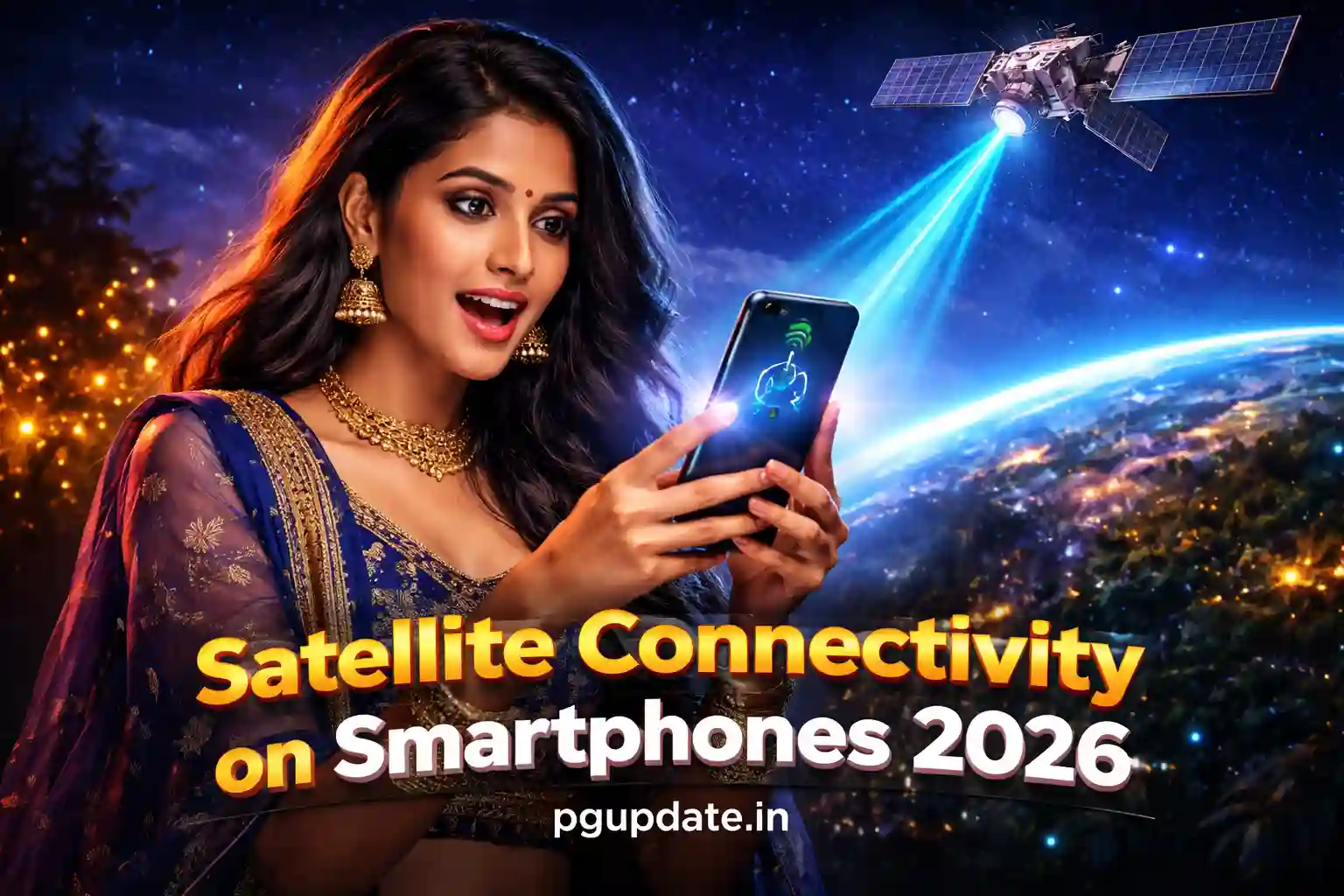
Satellite connectivity on smartphones 2026 has officially crossed a major milestone — it is no longer just an emergency SOS feature reserved for hikers and disaster zones. Thanks to satellite connectivity on smartphones, your regular Android or iPhone can now automatically switch from 5G to a low-Earth orbit (LEO) satellite network the moment you lose cellular signal. No special hardware. No expensive satellite phone. Just your existing device, connected from anywhere under an open sky.
In this complete guide, we cover everything about satellite connectivity on smartphones 2026 — how it works, which phones support it, which carriers offer it, and exactly what you can do with it. Whether you are wondering about Starlink on your phone, or want to know if your iPhone or Samsung supports satellite calling — read on.

What Is Satellite Connectivity on Smartphones 2026?
Satellite connectivity on smartphones 2026 means your phone can send and receive messages, make calls, and use select apps by connecting directly to satellites orbiting the Earth — without needing a cell tower nearby. This technology now works with your existing smartphone, requiring no external antennas, satellite modems, or special hardware of any kind.
The secret behind satellite connectivity on smartphones is Low-Earth Orbit (LEO) satellites — a new generation of small, fast-moving satellites orbiting just 200–550 km above Earth’s surface. Unlike older geostationary satellites that sit 35,786 km up, LEO satellites are close enough to connect directly to the antenna already inside your phone, dramatically reducing signal delay (latency) and making real-time communication possible.
The key players making satellite connectivity on smartphones 2026 a reality right now are:
- SpaceX Starlink — Powering T-Mobile’s T-Satellite service with 650+ LEO satellites
- Globalstar — Powering Apple’s satellite SOS on iPhone 14 and newer
- AST SpaceMobile — AT&T’s satellite partner, in development for full broadband
- Skylo — Powering Verizon’s satellite messaging on Galaxy S25 and Pixel 9 series
How Starlink Powers Satellite Connectivity on Smartphones 2026
Starlink Direct-to-Cell is the most widely available form of satellite connectivity on smartphones 2026. Here is exactly how it works step by step:
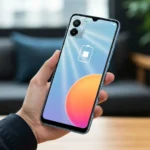
- Your phone loses cellular signal — You enter a dead zone, remote hiking trail, or rural area with no towers
- Automatic switchover — Your phone automatically detects the loss and connects to the nearest Starlink LEO satellite overhead
- Satellite acts as a cell tower in space — The Starlink satellite, orbiting ~200 miles up at 17,000 mph, relays your signal back to Earth
- New network name appears — On iPhone: “SAT” + “T-Mobile SpaceX”. On Android: satellite icon + “T-Sat+Starlink”
- You are connected — Send texts, share location, and use satellite-ready apps like WhatsApp, Google Maps, AccuWeather
The entire satellite connectivity on smartphones process is 100% automatic. No app to open, no pointing your phone at the sky, no settings to change. As T-Mobile’s official announcement confirms, satellite-ready apps connect exactly as expected — only now they work in places no cell tower has ever reached.
Which 7 Phones Support Satellite Connectivity on Smartphones 2026?
Not every phone supports satellite connectivity on smartphones 2026 yet — but the list is growing fast. Here is the full breakdown by brand:

1. Apple iPhone 14 and Newer — Built-In Satellite Connectivity on Smartphones
If you own an iPhone 14 or newer — including iPhone 15, 16, 16e, 17, iPhone Air, and iPhone 17 Pro — you already have satellite connectivity on smartphones built in at zero extra cost. Apple uses the Globalstar network, tightly integrated into iOS. iOS 18 expanded satellite from SOS-only to iMessage and SMS. No carrier plan needed.
2. Samsung Galaxy S21 and Newer — Satellite Connectivity via T-Mobile & Verizon
Samsung Galaxy S21 and newer support T-Mobile’s T-Satellite satellite connectivity on smartphones service. The Galaxy S25 series and later also support Verizon’s satellite service via Skylo. T-Mobile supports over 60 Samsung models — the broadest Android ecosystem for satellite connectivity on smartphones 2026. Check our best Samsung Galaxy phones guide for compatible model details.
3. Google Pixel 9 Series — Satellite SOS via Skylo/Verizon
The Google Pixel 9 series and newer support satellite connectivity on smartphones through Skylo, available via Verizon. Pixel phones activate satellite messaging automatically during emergency calls without coverage. The Pixel 10 Pro Fold also benefits from satellite-ready features in Android 16. Learn how Pixel’s on-device AI works with satellite in our on-device AI smartphones 2026 guide.
4. Motorola Razr / Edge / Moto G — Broadest Budget Satellite Connectivity on Smartphones
Motorola has one of the most impressive lists for satellite connectivity on smartphones 2026 via T-Satellite. Supported models include: Moto Razr 2024/2025, Razr+ 2024/2025, Razr Ultra 2025, Moto Edge 2024/2025, Moto G Power 5G 2025, Moto G Play 2026. Even budget Motorola phones now support satellite — proving how mainstream satellite connectivity on smartphones is becoming. See our best Android phones under ₹50,000 to find satellite-compatible budget picks.
Satellite Connectivity on Smartphones 2026: Full Carrier Comparison Table
Here is a complete side-by-side comparison of every satellite connectivity on smartphones 2026 carrier option:
| Carrier / Service | Satellite Partner | Compatible Phones | Features in 2026 | Cost |
|---|---|---|---|---|
| T-Mobile T-Satellite | SpaceX Starlink | 60+ models (iPhone, Samsung, Motorola, Pixel) | Texts, WhatsApp calls, Maps, Weather, SOS | Free on top plans / $10/mo add-on |
| Apple (built-in) | Globalstar | iPhone 14 and newer | Emergency SOS, iMessage, SMS via satellite | Free (included with iPhone) |
| Verizon | Skylo | Samsung Galaxy S25+, Pixel 9+ | Emergency messaging, location sharing | Included on select plans |
| AT&T | AST SpaceMobile | In development | Full broadband voice + data — coming soon | Not yet launched |
What Can You Do With Satellite Connectivity on Smartphones 2026?
In 2026, satellite connectivity on smartphones supports far more than emergency SOS. Here is everything you can currently do:
- ✅ Text messaging — Send/receive SMS anywhere with a clear sky view
- ✅ Emergency SOS — Text to 911 with zero cellular signal; location auto-shared
- ✅ WhatsApp voice & video calls — Group video calls from a mountaintop are real in 2026
- ✅ Location sharing — Share GPS position with family or rescue services
- ✅ Satellite-ready apps — Google Maps, AccuWeather, AllTrails, X (Twitter), T-Life
- ✅ Wireless Emergency Alerts — Government alerts received even off-grid
- ❌ Full video streaming / mobile data — Coming with Starlink V2 satellites in 2027
According to SatelliteInternet.com’s Starlink Direct-to-Cell guide, Starlink has already launched 650+ DTC satellites and received FCC approval to expand to over 15,000 — enough for truly global satellite connectivity on smartphones.
Satellite Connectivity on Smartphones 2026 vs 5G: Key Differences
Satellite connectivity on smartphones is a complement to 5G — not a replacement. Here is how they compare in 2026:
- 5G — Fast, low-latency, full data support. Covers ~70% of land area globally where towers exist
- Satellite connectivity on smartphones 2026 — Slower today but covers 100% of areas with a clear sky including oceans, mountains, and deserts
- In 2026 — Your phone uses 5G when available and seamlessly falls back to satellite connectivity automatically — the best of both worlds
Starlink’s V2 satellites launching in mid-2027 will deliver up to 100x more data capacity than today’s V1 satellites, making satellite connectivity on smartphones virtually indistinguishable from 5G. For how AI and 5G combine on your phone, see our on-device AI smartphones guide.
How to Activate Satellite Connectivity on Smartphones 2026 — Step by Step
Activating satellite connectivity on smartphones 2026 is simpler than most people expect:
For iPhone — Activate Satellite Connectivity in 3 Steps
- Update to iOS 18 or newer
- Go to Settings → Emergency SOS → Satellite Emergency SOS and enable it
- In a no-signal area, call 911 and follow the on-screen satellite prompts — iOS auto-routes iMessage and SMS via satellite
For Android — Activate T-Satellite Satellite Connectivity
- Check compatibility in the T-Life App → Manage → Your line → T-Satellite
- Add T-Satellite ($10/mo or free on Experience Beyond / Go5G Next plans)
- Update to Android 16 or latest available version
- Done — satellite connectivity on your smartphone activates automatically when cellular drops
- Look for satellite icon + “T-Mobile SpaceX” / “T-Sat+Starlink” in your status bar
Even AT&T and Verizon customers can access T-Satellite for $10/month without switching carriers (phone must be unlocked). Check the full compatible phone list at Techlicious for your specific model.
The Brilliant Future of Satellite Connectivity on Smartphones Beyond 2026
The roadmap for satellite connectivity on smartphones 2026 and beyond is one of the most exciting in all of tech:
- 2026 — T-Satellite expands internationally; Apple expands satellite messaging globally; more Android models added
- 2027 — Starlink V2 satellites enable 5G-class speeds from space; AT&T AST SpaceMobile launches full broadband satellite service
- 2028+ — Global satellite internet standard on all smartphones; Amazon Project Kuiper enters the direct-to-device market
As Global Rescue’s connectivity report confirms, the 3GPP NTN standard backed by Qualcomm and MediaTek will make satellite connectivity on smartphones a universal built-in feature — as standard as Wi-Fi or Bluetooth. Also check our best foldable phones 2026 guide — many top foldables already support satellite.
Frequently Asked Questions — Satellite Connectivity on Smartphones 2026
Which phones support satellite connectivity on smartphones in 2026?
The main phones with satellite connectivity on smartphones 2026 include iPhone 14+ (Globalstar — free), Samsung Galaxy S21+ (T-Mobile T-Satellite), Google Pixel 9 series (Skylo/Verizon), and 60+ Motorola models (T-Satellite). Apple iPhones have it built in free; Android users need a compatible carrier plan.
Does Starlink satellite connectivity work directly on smartphones in 2026?
Yes. Through T-Mobile’s T-Satellite partnership, Starlink’s satellite connectivity on smartphones connects directly to 60+ compatible phones without extra hardware. As of 2026, 650+ Starlink satellites cover the entire continental US, Hawaii, Puerto Rico, and parts of Alaska.
Can I make calls using satellite connectivity on my smartphone?
Yes, partially. T-Mobile T-Satellite supports WhatsApp voice and video calls via satellite connectivity on smartphones. Native cellular calls over satellite are coming with Starlink V2 in 2027. Emergency text-to-911 is supported right now on all compatible devices.
How much does satellite connectivity on smartphones cost in 2026?
T-Mobile T-Satellite satellite connectivity on smartphones costs $10/month as an add-on, or is free on Experience Beyond and Go5G Next plans. Apple’s satellite connectivity on iPhones is completely free. AT&T and Verizon customers can subscribe to T-Satellite for $10/month without switching carriers.
Does satellite connectivity on smartphones work indoors?
No. Satellite connectivity on smartphones 2026 requires a clear, unobstructed view of the sky. It does not work indoors, underground, or in dense urban areas where buildings block the satellite signal. It is specifically designed for outdoor dead-zone use.
Conclusion: Satellite Connectivity on Smartphones 2026 Is Here to Stay
Satellite connectivity on smartphones 2026 has moved from futuristic promise to practical everyday feature. From iPhone’s built-in Globalstar SOS to T-Mobile’s T-Satellite powered by SpaceX Starlink, the era of being completely unreachable in remote areas is nearly over.
Whether you are a hiker, a traveller, a first responder, or someone who simply drives through dead zones regularly — satellite connectivity on your smartphone is one of the most brilliant safety upgrades of this decade. The technology is still maturing, but the foundation is firmly in place, and 2027’s Starlink V2 upgrade will take it to an entirely new level.
Stay ahead of the latest in mobile technology at PGUpdate.in — your trusted source for phone guides, tech news, and Windows fixes.
Found this guide useful? Share it with someone who travels to remote areas or struggles with dead zones!