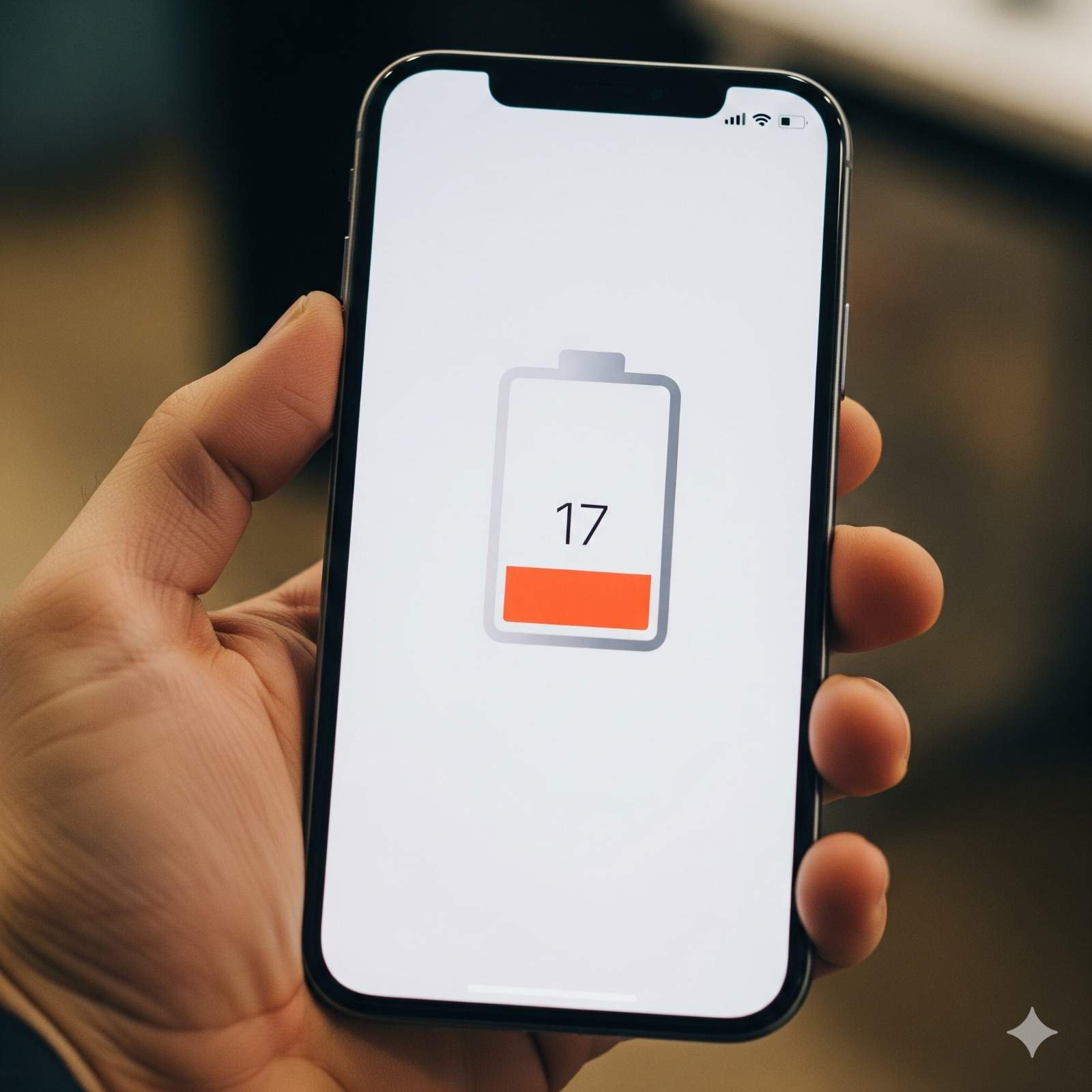
Executive Summary: The Dawn of a New Power Paradigm
The iPhone 17 series is poised to deliver a generational leap in battery performance, driven by a strategic, multi-pronged approach that moves beyond incremental increases. This includes a significant capacity overhaul for the Pro and Pro Max models, the integration of advanced battery chemistry, and a continued focus on silicon and software efficiency. Leaks from Chinese regulatory databases reveal that the iPhone 17 Pro Max is set to be the first iPhone to exceed the 5,000 mAh threshold, while the iPhone 17 Pro receives an unprecedented year-over-year capacity boost.1 The iPhone 17 Air, despite its ultra-thin design, is projected to defy initial battery fears due to innovative engineering.5 These upgrades are complemented by new charging capabilities, including a boost to 35W wired charging and the long-awaited introduction of reverse wireless charging on Pro models.6
In synthesis, the iPhone 17’s battery upgrades represent Apple’s most significant and holistic advancement in a single generation. This marks a fundamental shift in the company’s design philosophy, from an obsession with thinness to a strategic prioritization of user-centric performance and longevity. The confluence of these hardware and software innovations solidifies Apple’s position as a leader in smartphone endurance and signals a new era of valuing sustained power over form factor alone.

The Quantitative Leap: A New Era of iPhone Battery Capacity
For years, iPhone battery capacity has seen conservative, year-over-year growth, with Apple relying on the efficiency of its custom silicon to deliver endurance gains. However, newly surfaced data from a Chinese regulatory database, widely shared by prominent leakers, suggests a monumental shift in this strategy for the iPhone 17 series.1 The leaked figures reveal a level of aggressive battery expansion that is unprecedented for a single iPhone generation and are notably higher than many analysts had initially predicted.4
The rumored capacities for each model paint a clear picture of this new approach. The base iPhone 17 is expected to feature a 3,692 mAh battery.1 The iPhone 17 Pro is set to get a 4,252 mAh cell, while the top-tier iPhone 17 Pro Max is poised to become the first iPhone to cross the 5,000 mAh mark, with a capacity of 5,088 mAh.1 The new iPhone 17 Air, which replaces the former Plus model, reportedly has a capacity of 3,036 mAh for versions with a physical SIM tray and 3,149 mAh for eSIM-only variants.2

A detailed breakdown of these numbers shows where the most significant gains lie. The iPhone 17 Pro Max’s 5,088 mAh capacity represents an 8.6% improvement over the iPhone 16 Pro Max’s 4,685 mAh battery.1 More impressively, the iPhone 17 Pro sees an even more dramatic jump of 18.7% over its predecessor, an aggressive increase that could make it the most compelling upgrade in the lineup from an endurance perspective.2 By contrast, the base iPhone 17 gets a more modest 3.7% increase.2
This generational leap in capacity is further illuminated by a nuanced detail found within the leaks: the distinction between models with a physical SIM card tray and those that are eSIM-only. Reports indicate that the Pro and Pro Max models will have different capacities based on region, with the US versions receiving larger batteries.1 This is a strategic hardware choice that leverages a change in cellular connectivity for a tangible user benefit. The removal of the physical SIM card tray, a practice Apple initiated in the US with the iPhone 14 series, frees up valuable internal space that can now be utilized for a larger power cell, a strategic decision that creates a premium hardware experience tied directly to the adoption of a new technology standard.2

This shift in strategy represents a fundamental change in Apple’s design philosophy. For years, the company has prioritized making its devices thinner and lighter, often relying on chip and software efficiency to maintain battery life.4 The fact that the iPhone 17 Pro Max is rumored to be slightly thicker to accommodate its larger battery is a clear signal that Apple is acknowledging the physical limitations imposed by modern, power-hungry features like brighter displays, 5G, and on-device AI.1 This willingness to break with a long-standing design principle to meet top consumer complaints and competitive pressures is a powerful indicator of the importance Apple is placing on this specific upgrade.3 The company is creating a compelling reason for consumers and carriers in other regions to adopt eSIM technology, effectively pushing a long-term strategic goal with a tangible hardware benefit.
| Model | iPhone 17 (rumored) mAh | iPhone 16 (official) mAh | iPhone 15 (official) mAh | YoY Increase (iPhone 17 vs. 16) % |
| iPhone 17 | 3,692 | 3,561 | 3,349 | +3.7% |
| iPhone 17 Air | 3,149 | 4,422 (Plus) | 4,383 (Plus) | -28.7% |
| iPhone 17 Pro | 4,252 | 3,582 | 3,274 | +18.7% |
| iPhone 17 Pro Max | 5,088 | 4,685 | 4,422 | +8.6% |
The Air’s Anomaly: Balancing Form and Function
While the Pro models are gaining significant size, the iPhone 17 Air presents a fascinating case study in balancing extreme form with practical function. Rumored to be Apple’s thinnest iPhone yet at a mere 5.5 mm thick, the device initially sparked fears of a “battery disaster” among tech enthusiasts and analysts.5 Early speculation suggested a capacity as low as 2,800 mAh, a figure that would have made a full day of use a significant challenge.9

However, the latest regulatory filings tell a different story. The iPhone 17 Air’s rumored capacity is 3,036 mAh (with SIM) and 3,149 mAh (eSIM), figures that are surprisingly competitive despite its constrained form factor.2 While this capacity is smaller than the base iPhone 16’s 3,561 mAh battery, the reduction is not the “40 to 50 percent cliff” that some had warned about.5
The technological solution that enables this unexpected endurance is the rumored use of a silicon anode battery.4 This advanced battery chemistry, which partially substitutes silicon for graphite in the anode, allows for a higher energy density in a smaller, thinner package.
This technology is not theoretical; other OEMs like Xiaomi have already used similar silicon-carbon chemistry to achieve significant capacity gains in their flagships, demonstrating a tangible proof of concept.4 The iPhone 17 Air serves as a clear proof of Apple’s ability to overcome a fundamental engineering challenge through materials science, showcasing a path for future ultra-thin iPhones that do not compromise on battery life.
The traditional engineering dilemma for ultra-thin phones has always been battery size, but by reportedly leveraging silicon anode chemistry, Apple is demonstrating a viable solution to this problem, signaling a future where the company can pursue thinner designs without the severe battery trade-offs of the past.5
This strategic choice also has broader implications for Apple’s product lineup. The iPhone 12 and 13 mini models were reportedly canceled largely due to poor battery life, a direct result of their small size.11 The iPhone 17 Air’s surprisingly competitive capacity suggests that a new era of thin, non-Pro iPhones is possible. The device’s success could redefine the “mini” or “budget” iPhone segment, replacing the previous trade-off of a small size for a small screen with a new, more palatable trade-off of a slim profile for slightly less endurance.5
Under-the-Hood Innovations: The True Drivers of Endurance
While raw capacity figures grab headlines, the true drivers of the iPhone 17’s projected endurance are the sophisticated, under-the-hood innovations in battery architecture and silicon. The iPhone 17 series is expected to continue using stacked battery technology, a significant advancement first introduced with the iPhone 15 Pro.
Unlike traditional “wound” batteries where components are rolled up, stacked batteries layer the anode and cathode flatly on top of each other.17 This design, which is also used in modern electric vehicles, leads to a higher energy density because it utilizes internal space more efficiently.17
Beyond raw capacity, this architecture has a profound impact on a device’s long-term health and performance. Stacked batteries offer better thermal management and a more uniform temperature distribution during charging and discharging.18 This is crucial for long-term battery health, as heat is a primary factor in battery degradation. The layered design also reduces internal resistance and eliminates “stress concentration points” that are common in wound batteries, which in turn slows down capacity decay over time.18
This is a strategic move by Apple to address a key pain point for consumers: the noticeable decline in battery health after a year or two of use.20 By implementing this technology across its entire lineup, Apple is not just improving day-one battery life but also extending the usable lifespan of the device, which aligns with its broader sustainability and product longevity goals.
Raw capacity and battery architecture are only two parts of the equation. The third is the efficiency of the core processing unit. The iPhone 17 and iPhone 17 Air will reportedly be powered by the new Apple A19 chip, while the Pro and Pro Max models will use the A19 Pro.6 Both chips are expected to be built on a refined 3nm process, making them even more power-efficient than their predecessors.4 This synergy between hardware and software is a hallmark of Apple’s “playbook” for delivering better-than-expected battery life.5 The combination of a larger battery and a more efficient A19 Pro chip creates a compounded gain in battery life that exceeds what either innovation could achieve alone.4 A bigger battery provides a larger reservoir of energy, while a more efficient chip sips from that reservoir more slowly.4 The compounding effect means that a user doesn’t just get the benefit of a larger battery; they get a disproportionately larger gain in endurance because the entire system is consuming less power over time. This is why some reports suggest a 20% endurance boost or an extra four hours of life for the iPhone 17 Pro Max.1
Charging and Power: A Shift in Apple’s Conservative Stance
For years, Apple has remained notably conservative with its charging speeds, especially compared to the ultra-fast charging offered by many Android manufacturers. However, with the iPhone 17 series, the company appears to be making a modest but meaningful shift. The lineup is rumored to feature a bump to 35W wired charging, a step up from the 27-30W speeds of previous generations.6 This upgrade could allow for a full charge in under 90-100 minutes, a welcome improvement for a device with a larger power cell.6
Perhaps more significant is the expected arrival of a long-requested feature on the Pro and Pro Max models: reverse wireless charging.6 After years of being a common feature on flagship Android phones, this capability would enable users to charge accessories like AirPods or an Apple Watch by simply placing them on the back of their phone.6 This is not simply a matter of playing catch-up; it is a strategic move to further entrench users in Apple’s ecosystem. The feature is most valuable for charging first-party accessories, making the iPhone a central power hub and increasing the utility of other Apple products.7
Apple’s approach to charging speeds, while still conservative compared to rivals offering 45W, 65W, or even higher speeds, is a deliberate strategy.6 The company has consciously traded a lightning-fast charge time for a healthier battery in the long run. The focus on a slower trickle charge after the initial 80% is a key part of this strategy, designed to prolong the battery’s lifespan.23 Additionally, Apple’s adoption of the USB Power Delivery (USB-PD) standard means that users can achieve near-full speeds with high-quality third-party chargers, without the need for proprietary voltage profiles.6
Real-World Performance: Translating Specs to User Experience
Translating raw mAh numbers into practical, real-world hours can be challenging, but an analysis of leaks and historical performance provides a strong basis for estimation. The iPhone 17 Pro Max is expected to deliver a massive improvement in endurance, with an estimated video playback time of 36 to 40 hours, up from the iPhone 16 Pro Max’s 33 hours.4 This could mean a full day and a half of power for a moderate user.24 The iPhone 17 Pro, with its dramatic 18.7% capacity increase, is expected to provide three more hours of video playback than its predecessor.3 Even the iPhone 17 Air, despite its smaller capacity, is projected to last a full day under moderate use, achieving around 18-20 hours of mixed usage, thanks to software optimizations and new battery chemistry.4
While Apple’s numbers are impressive, they must be viewed within the broader competitive landscape. The Samsung Galaxy S25 Ultra reportedly has a 5,000 mAh battery, a figure on par with the iPhone 17 Pro Max.22 However, Apple’s vertically integrated ecosystem, combining its A19 Pro chip, iOS power management, and stacked battery efficiency, could provide a significant edge in real-world endurance tests.4 Similarly, while the Google Pixel 10 Pro XL is rumored to get a 5,200 mAh battery, historical performance shows that iPhones, with their superior hardware and software optimization, often last several hours longer in battery drain tests, even with smaller batteries.21
Apple’s strategic focus on superior video playback and on-device AI efficiency is designed to appeal directly to the “creator” and “power user” segment. The iPhone 17 Pro Max’s superior video playback time is a key selling point for professional videographers and content creators who use their phone for shooting and editing 4K footage.4 The improved efficiency of the A19 Pro chip is also critical for these users, as on-device machine learning tasks and AI features are notoriously resource-intensive.6 A chip that can handle these heavy workloads without excessive heat or power drain is a major competitive advantage, positioning the iPhone as a professional tool that can go from “wake to sleep without a top up”.4
Conclusion: A Holistic Approach to Battery Advancement
The iPhone 17 series represents a landmark release for Apple’s battery strategy. The claim of the “biggest battery upgrades ever” is not hyperbole when one considers the confluence of innovations: a monumental leap in raw capacity, the integration of new battery chemistry, the continued refinement of its in-house silicon, and the addition of long-requested features like reverse wireless charging. This series signals a new chapter for Apple, one where it is willing to make strategic design choices to meet evolving user needs and maintain its competitive edge in a crowded market. The iPhone 17 series promises to deliver not just longer-lasting devices, but more capable, robust, and forward-looking ones, prioritizing a holistic power solution over the thinness-at-all-costs philosophy of the past.
Keywords:
iPhone 17, iPhone 17 Pro Max, iPhone 17 battery life, iPhone 17 battery capacity, iPhone 17 Air, stacked battery technology, silicon anode battery, iPhone 17 rumors, iPhone 17 upgrades, iPhone 17 charging, A19 chip, reverse wireless charging, best iPhone battery