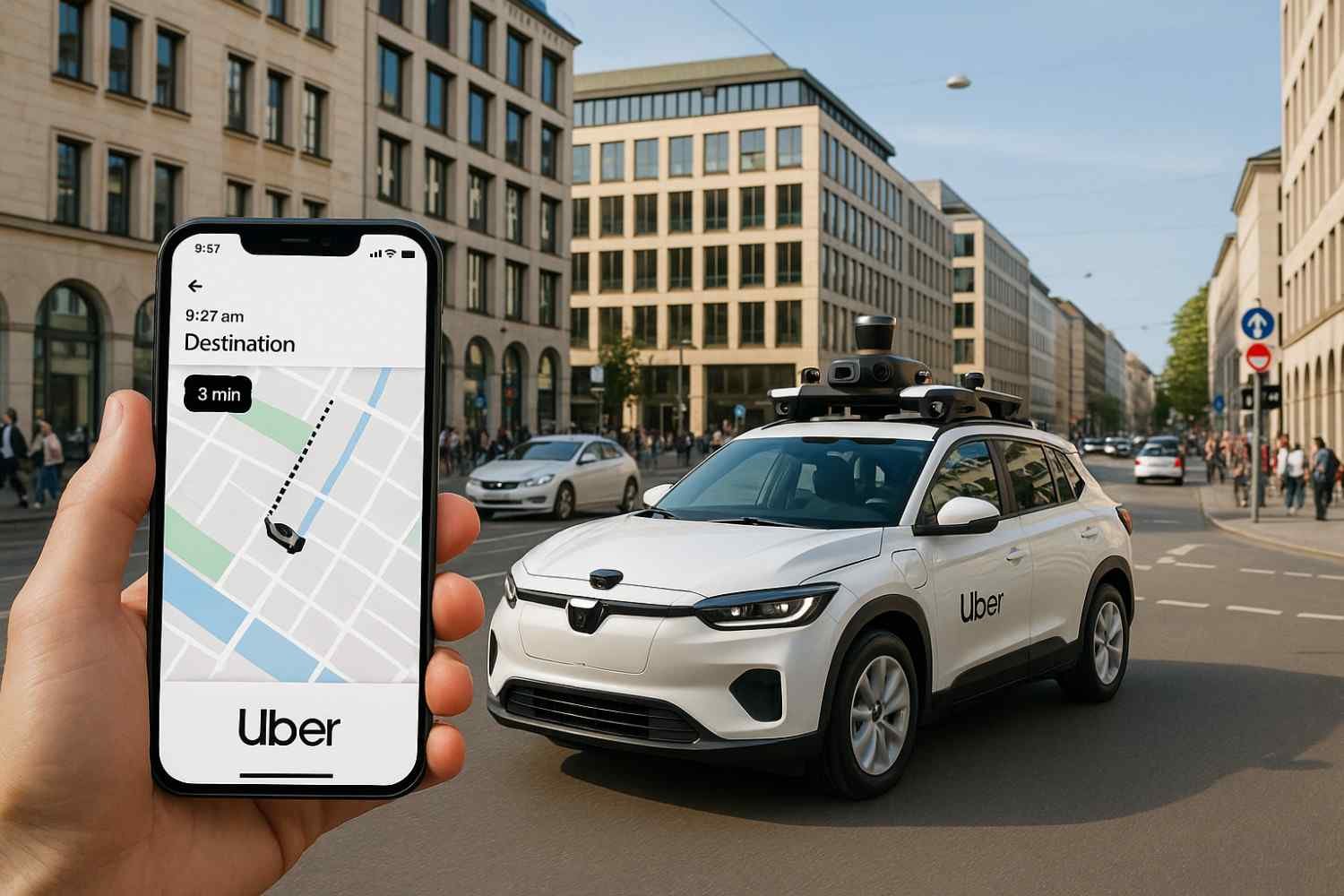
Uber and Chinese Startup Momenta Set to Launch Robotaxis in Munich by 2026:The partnership between ride-hailing giant Uber and Chinese autonomous driving company Momenta represents a groundbreaking development in European autonomous vehicle deployment, with Munich selected as the launch city for their joint robotaxi service beginning in 2026. This collaboration marks a significant milestone in the global expansion of autonomous mobility services and positions Europe at the forefront of next-generation transportation technology.

Timeline of Uber and Momenta’s robotaxi partnership milestones and projected European rollout

Strategic Partnership Formation and Global Expansion
The collaboration between Uber and Momenta was first announced in May 2025, establishing a strategic framework for introducing autonomous vehicles to international markets outside the United States and China. The partnership leverages Uber’s extensive global mobility platform with Momenta’s advanced AI-driven autonomous driving technology, creating a comprehensive ecosystem for scalable robotaxi deployment. This alliance represents part of Uber’s broader strategy to establish partnerships with leading autonomous vehicle companies worldwide, having already formed collaborations with 20 global AV partners that collectively generate an annualized rate of 1.5 million mobility and delivery trips.
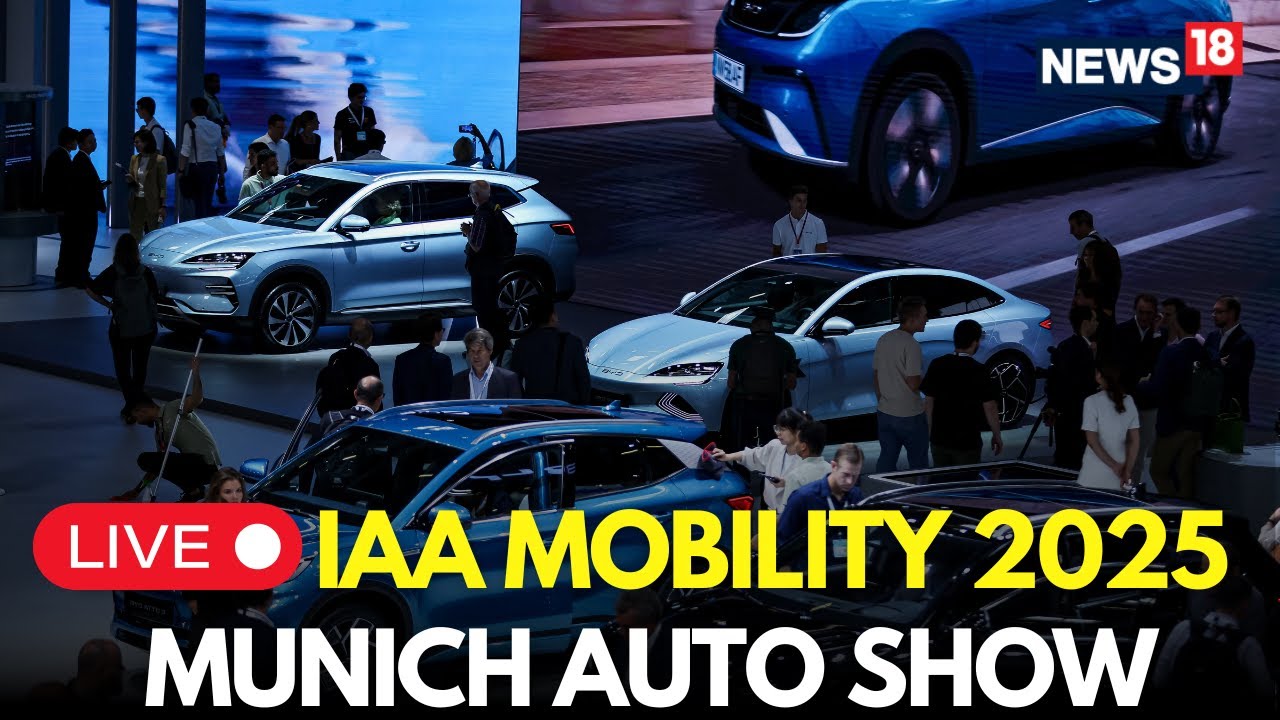
Live coverage of the IAA Mobility 2025 at Munich Auto Show showcasing futuristic cars and mobility innovations

The announcement of Munich as the European launch city was made at the IAA MOBILITY 2025 automotive trade show in September, where both companies’ executives emphasized the strategic importance of Germany’s automotive heritage and innovation ecosystem. Uber CEO Dara Khosrowshahi noted that “Germany has shaped the global automotive industry for more than a century, and now Munich will help define the future of autonomous vehicles”. Similarly, Momenta CEO Cao Xudong highlighted the opportunity to demonstrate how the company’s AI-driven robotaxi technology can transform urban mobility while contributing to Munich’s rich automotive history.
Momenta’s Technological Foundation and Market Position
Momenta, founded in 2016 and headquartered in Shanghai, has established itself as a pioneer in China’s competitive autonomous vehicle sector through its unique “flywheel approach” and “two-leg” product strategy. The company’s technological framework combines data-driven algorithm iteration with both mass-production-ready assisted driving solutions (Mpilot) and full autonomy-targeting robotaxi systems (MSD – Momenta Self-Driving). This dual approach has enabled Momenta to deploy its intelligent driving systems across more than 400,000 production vehicles while simultaneously advancing Level 4 autonomous capabilities.

The company’s proprietary R6 Flywheel Big Model represents a significant technological advancement, serving as the first reinforcement learning-based system to achieve true mass production deployment in China. This AI model integrates perception, planning, and decision-making processes while leveraging 70 million high-value data clips and over 3 billion kilometers of real-world driving data. Through continuous learning and optimization, the system aims to not only match but surpass human driving capabilities, particularly in complex scenarios unique to urban environments such as sudden lane changes, hidden pedestrian detection, and unprotected left turns.
Momenta’s strategic partnerships extend beyond Uber to include major global automakers such as General Motors, Toyota, Mercedes-Benz, BMW, Audi, and Volkswagen. The company has secured significant investments from industry leaders, including a $300 million investment from General Motors in 2021 and funding from SAIC Motor, Bosch, and other automotive giants. These partnerships have resulted in contracts to supply assisted driving technologies to more than 130 vehicle models, with 26 models already in production as of 2024

Munich: Strategic Launch Location and Regulatory Environment
Munich’s selection as the European launch city reflects several strategic advantages that make it an ideal testing ground for advanced autonomous vehicle technology. The city serves as a historic hub of Germany’s automotive industry and maintains a world-class automotive ecosystem with established relationships between Momenta and German premium automakers including Mercedes-Benz and BMW. This existing industrial network provides a foundation for successful technology integration and regulatory compliance.
Aerial view of a modern automotive technology and innovation center in Munich, Germany, highlighting the city’s role in automotive research and future mobility solutions
Germany’s regulatory framework for autonomous vehicles represents one of the most progressive approaches globally, particularly regarding Level 4 autonomous systems. The country enacted the world’s first legal framework for driverless vehicles in regular operations on public roads through the Eighth Act amending the Road Traffic Act and the Act on Autonomous Driving of 2021. The accompanying ordinance, which has been in force since July 2022, allows autonomous motor vehicles to operate in defined operational areas on public roads without requiring special test scenario limitations.
The German Federal Ministry of Transport has established clear timelines for autonomous vehicle deployment, with goals to seamlessly transition from trialling to normal operations by 2026 and create the world’s largest coherent operational area for autonomous vehicles by 2028. This regulatory environment aligns perfectly with Uber and Momenta’s deployment timeline, providing legal certainty and operational clarity for commercial robotaxi services.
Technology Implementation and Safety Protocols
The robotaxi service will utilize Level 4 autonomous vehicles capable of operating without human intervention in specific geographic zones and under certain conditions. Unlike many industry robotaxi programs that require purpose-built vehicles, Momenta employs a unique approach by repurposing mass-production vehicles for its robotaxi fleet, utilizing a unified software architecture and sensor setup across L2 and L4 systems. This strategy accelerates scalable deployment while enabling faster commercial implementation through proven automotive platforms.
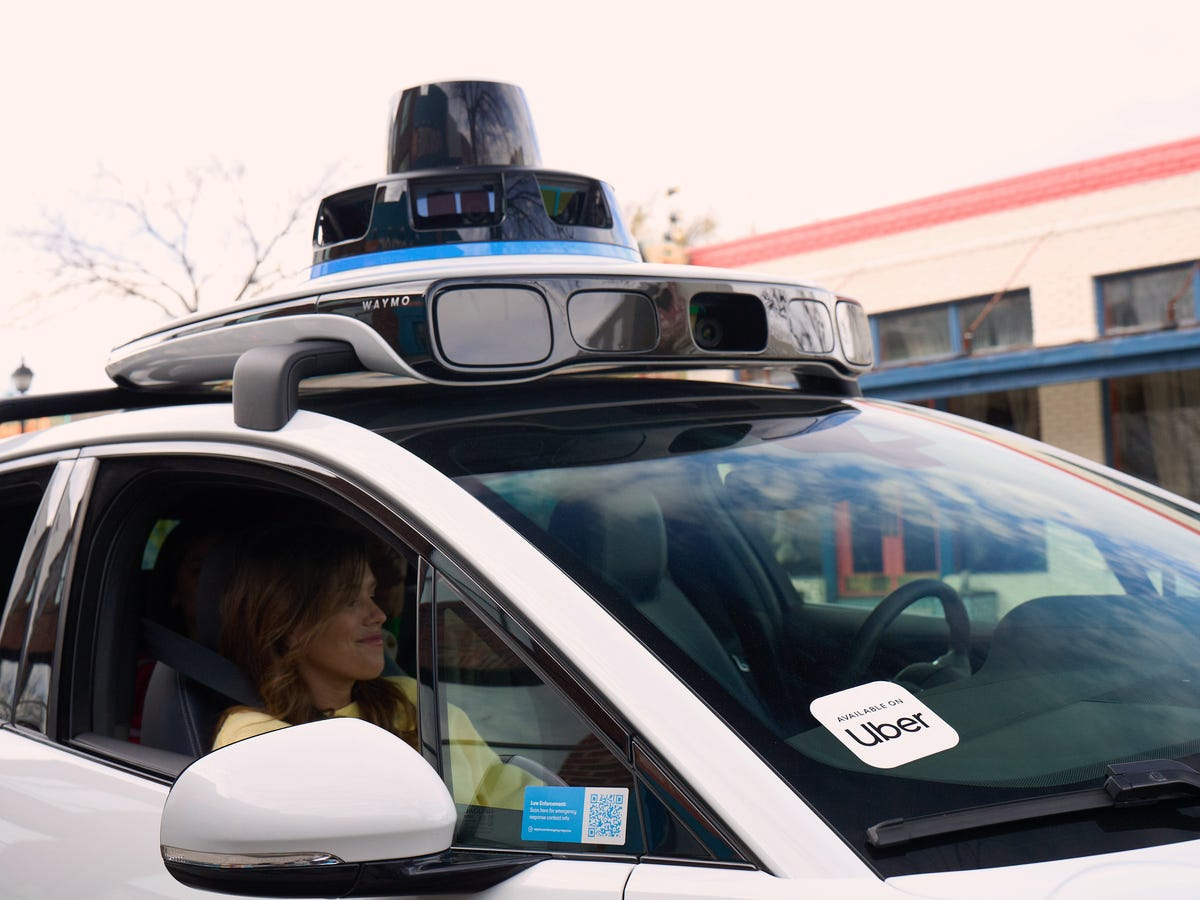
A Waymo autonomous vehicle integrated with Uber’s platform, showcasing self-driving technology for robotaxi services
Initially, the Munich deployment will include onboard safety operators to oversee operations and intervene if necessary, following industry best practices for autonomous vehicle rollouts. The vehicles will be equipped with comprehensive sensor suites including LiDAR, cameras, radar, and GPS systems to ensure safe navigation in complex urban environments. Momenta’s collaboration with sensor technology providers, including partnerships with companies like Hesai for high-performance LiDAR solutions, ensures robust perception capabilities for autonomous operation.
The integration with Uber’s platform will allow local residents to summon Momenta robotaxi vehicles directly through the existing Uber app, providing seamless access to autonomous mobility services. This approach leverages Uber’s established user interface and operational infrastructure while introducing cutting-edge autonomous technology to European consumers.
Market Context and Competitive Landscape
The European robotaxi market presents significant growth opportunities, with projections indicating a compound annual growth rate (CAGR) of 72.7% from 2025 to 2030, potentially reaching $8.6 billion by 2030. The market generated approximately $394.6 million in revenue in 2024, with electric vehicles representing the largest and fastest-growing propulsion segment. This growth trajectory reflects increasing urbanization, environmental policies promoting sustainable transportation, and substantial investments in smart infrastructure across European cities.
The competitive landscape in Europe is rapidly evolving, with several major players announcing similar initiatives. Baidu has partnered with Lyft to launch robotaxis in the UK and Germany by 2026, while other Chinese companies including WeRide and Pony.ai have established collaborations with Uber for Middle Eastern deployments that may expand to European markets. Additionally, European automotive manufacturers such as Volkswagen are developing their own robotaxi capabilities, with plans to launch services in partnership with various technology providers.
The Uber-Momenta partnership differentiates itself through several key advantages. First, the integration with Uber’s global platform provides immediate access to an established user base and operational infrastructure. Second, Momenta’s proven track record in mass-production vehicle integration offers a more scalable and cost-effective approach compared to purpose-built robotaxi solutions. Third, the company’s extensive data collection and AI model training provide sophisticated autonomous driving capabilities tested across diverse urban environments in China.
Economic Impact and Industry Implications
The deployment of robotaxi services in Munich represents more than a technological demonstration; it signifies a potential transformation of urban mobility patterns and economic structures. The European Union has estimated that autonomous vehicles could generate €1.5 trillion in total value added between 2020 and 2050, emphasizing the significant economic potential of automation. For Munich specifically, the robotaxi service could address transportation challenges in urban areas while supporting the city’s commitment to sustainable mobility solutions.
The partnership also reflects broader geopolitical and economic trends in the automotive industry. Chinese companies’ expansion into European markets through strategic partnerships demonstrates the global nature of autonomous vehicle development and the importance of international collaboration in advancing transportation technology. For Uber, the partnership provides access to advanced AI capabilities and manufacturing expertise while avoiding the substantial capital investments required for in-house autonomous vehicle development.
The success of the Munich deployment could serve as a catalyst for broader European expansion, with both companies indicating plans to extend operations to additional European cities following successful implementation. This phased approach allows for iterative improvement of technology and operational processes while building consumer confidence in autonomous transportation services.
Future Prospects and Expansion Plans
Beyond the initial Munich launch, Uber and Momenta have outlined ambitious plans for European expansion, with the potential to extend robotaxi services to multiple cities across the continent. The success of the Munich pilot will likely influence the pace and scope of this expansion, serving as a proving ground for autonomous vehicle technology in European urban environments.
The partnership aligns with broader industry trends toward sustainable transportation solutions, with nearly 90% of robotaxis expected to be battery-electric by 2030. This emphasis on electrification supports European Union environmental policies and government incentives for electric vehicle adoption, creating favorable conditions for widespread robotaxi deployment.
Momenta’s continued development of its autonomous driving capabilities, including plans to launch fully driverless operations in Shanghai by the end of 2025, provides valuable experience and technological refinement that will benefit the European expansion. The company’s end-to-end neural network artificial intelligence model, scheduled for launch later in 2025, represents the next generation of autonomous driving technology that could further enhance the performance and safety of robotaxi services.
Conclusion
The Uber-Momenta partnership to launch robotaxis in Munich by 2026 represents a pivotal moment in the evolution of autonomous transportation in Europe. By combining Uber’s global mobility platform with Momenta’s advanced AI-driven autonomous driving technology, this collaboration has the potential to establish new standards for urban mobility while demonstrating the commercial viability of robotaxi services in European markets. The strategic selection of Munich, supported by Germany’s progressive regulatory framework and established automotive ecosystem, provides an optimal environment for successful deployment and future expansion across the continent.
Keywords: robotaxi, autonomous vehicles, Uber, Momenta, Munich, Level 4 autonomy, artificial intelligence, European mobility, ride-hailing, smart transportation, German automotive industry, IAA Mobility 2025, electric vehicles, urban mobility, technology partnership