
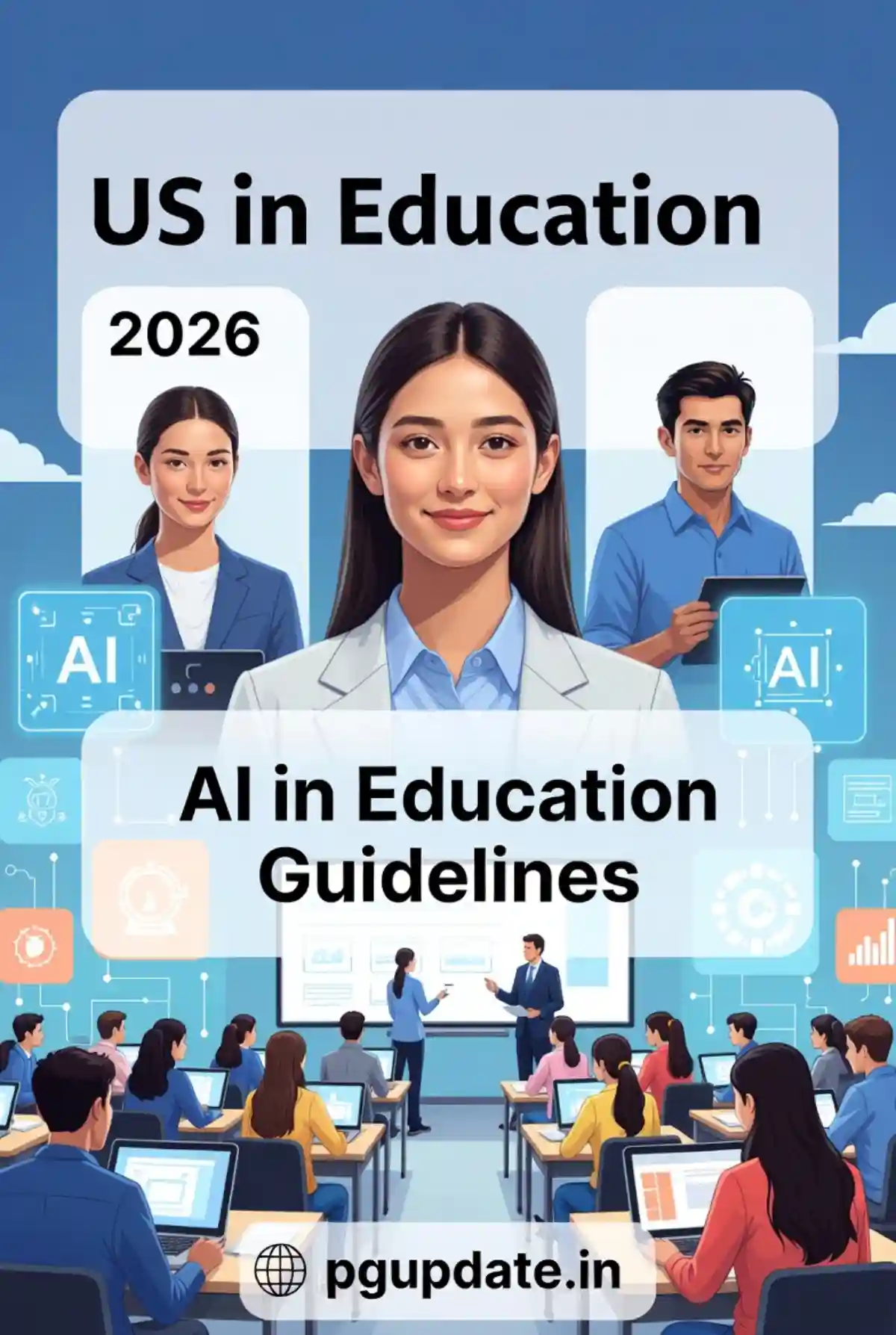
Artificial intelligence is no longer a future concept for American classrooms; it is already reshaping how students learn and how teachers work. At the same time, schools are under pressure to follow clear, safe, and fair AI in education guidelines in US schools 2026 so that innovation does not create new risks for children.
What Is Changing in US Schools in 2026?
In just a few years, AI tools such as ChatGPT‑style chatbots, AI writing assistants, and adaptive learning platforms have become common in K‑12 classrooms across the United States. Surveys show that more than half of teachers already use some form of AI in their instruction, especially when it is built into existing edtech products.

At the same time, state lawmakers in at least 21 states proposed more than 50 bills in a single legislative session to regulate AI in education, which experts described as “unprecedented” attention. This combination of rapid adoption and rapid regulation is exactly why clear AI guidelines are a hot topic for US educators in 2026.
Federal Guidance on AI in Education
The U.S. Department of Education has issued guidance on the safe and effective use of AI in schools, focusing on protecting students while still encouraging innovation. This guidance emphasizes principles such as human decision‑making, transparency, data privacy, and avoiding algorithmic bias when schools adopt AI tools.

To explore the official federal guidance, you can link to the Department of Education’s page on AI in schools using an anchor like:
The federal government has also highlighted AI literacy and integration as national priorities, encouraging districts to train both teachers and students in how AI works and how to use it responsibly.

States Put “Unprecedented” Attention on AI Guidelines
Because education policy in the US is strongly influenced by individual states, state‑level AI guidance is just as important as federal policy in 2026. In 2025 alone, states proposed bills that cover AI literacy, responsible use guidelines, task forces, bans on specific uses, and protections against AI‑generated abusive content.
According to analyses from organizations like the Center for Democracy and Technology and the State Educational Technology Directors Association (SETDA), the main areas of focus include:
- AI literacy for students and teachers (training, professional development, digital citizenship).
- Responsible use policies that define what AI tools can and cannot be used for in class.
- Task forces and commissions to study the impact of AI on K‑12 education.
- Restrictions on sensitive uses, such as mental health counseling or highly personal data collection.
You can give readers a helpful external resource by linking to a state AI guidance for education hub like https://www.aiforeducation.io/ai-resources/state-ai-guidance).[2]
Key Principles for AI in Education Guidelines in US Schools 2026
Whether you are writing for school leaders, teachers, or parents, the most useful part of your article is a clear explanation of the core principles that should be in any AI guideline for US schools in 2026.
- Human-in-the-loop teaching
AI tools should support, not replace, teachers. Educators remain responsible for final decisions about grades, feedback, and interventions. - Student data privacy and security
Schools must carefully vet AI vendors for how they collect, store, and use student data, and they should follow laws like FERPA and state privacy regulations. Asking vendors clear questions about data retention, model training, and third‑party sharing is becoming standard practice. - Equity and bias prevention
AI systems can unintentionally reinforce bias, for example in discipline, grading, or admissions decisions. Guidelines need to require regular monitoring, diverse training data where possible, and transparent appeals processes when AI‑assisted decisions seem unfair. - Academic integrity and honest learning
Many districts now treat AI writing like calculators: helpful if used with limits, harmful if used to cheat. Clear rules should explain when students may use AI (idea generation, language support) and when they must submit original, independent work. - Transparency for families and students
Parents and students should know when AI is being used, what data it relies on, and how it can affect grades or recommendations. Schools can support this with parent letters, website FAQs, and opt‑out options for certain experimental tools.
To give your readers more depth, you can add an external link with anchor text like practical AI classroom integration tips pointing to a reputable classroom‑focused AI guide, such as a teacher‑oriented article on AI use in US schools.
Practical Examples of AI Use in US Classrooms
In 2026, many practical classroom examples help make AI in education guidelines feel real and useful rather than abstract.
- Personalized practice and tutoring: Adaptive learning platforms adjust math or reading content based on student performance, giving extra practice where needed.
- Lesson planning support for teachers: AI assistants can suggest lesson ideas, quiz questions, or differentiated activities in seconds, saving teacher time.
- Language and accessibility support: AI‑powered translation, captioning, and text simplification tools make content more accessible for multilingual learners and students with disabilities.
However, guidelines often remind educators to double‑check AI outputs, verify accuracy, and avoid uploading sensitive student information into public AI tools.
How Schools Can Build Their Own AI Policy in 2026
For American schools that do not yet have a formal AI policy, 2026 is the year to start building one that aligns with both state guidance and federal principles.
A simple process districts can follow includes:
- Reviewing federal guidance and state AI resources as a baseline.
- Forming a small committee of teachers, students, parents, and IT leaders to draft rules.
- Piloting AI tools in a limited way, collecting feedback, and updating the policy regularly.
Districts are also using procurement guides and checklists from organizations like SETDA to ask smarter questions of edtech vendors about how their AI actually works in practice. You can link to such resources using anchor text like questions to ask AI edtech vendors to help administrators who read your article.



A really good blog and me back again.