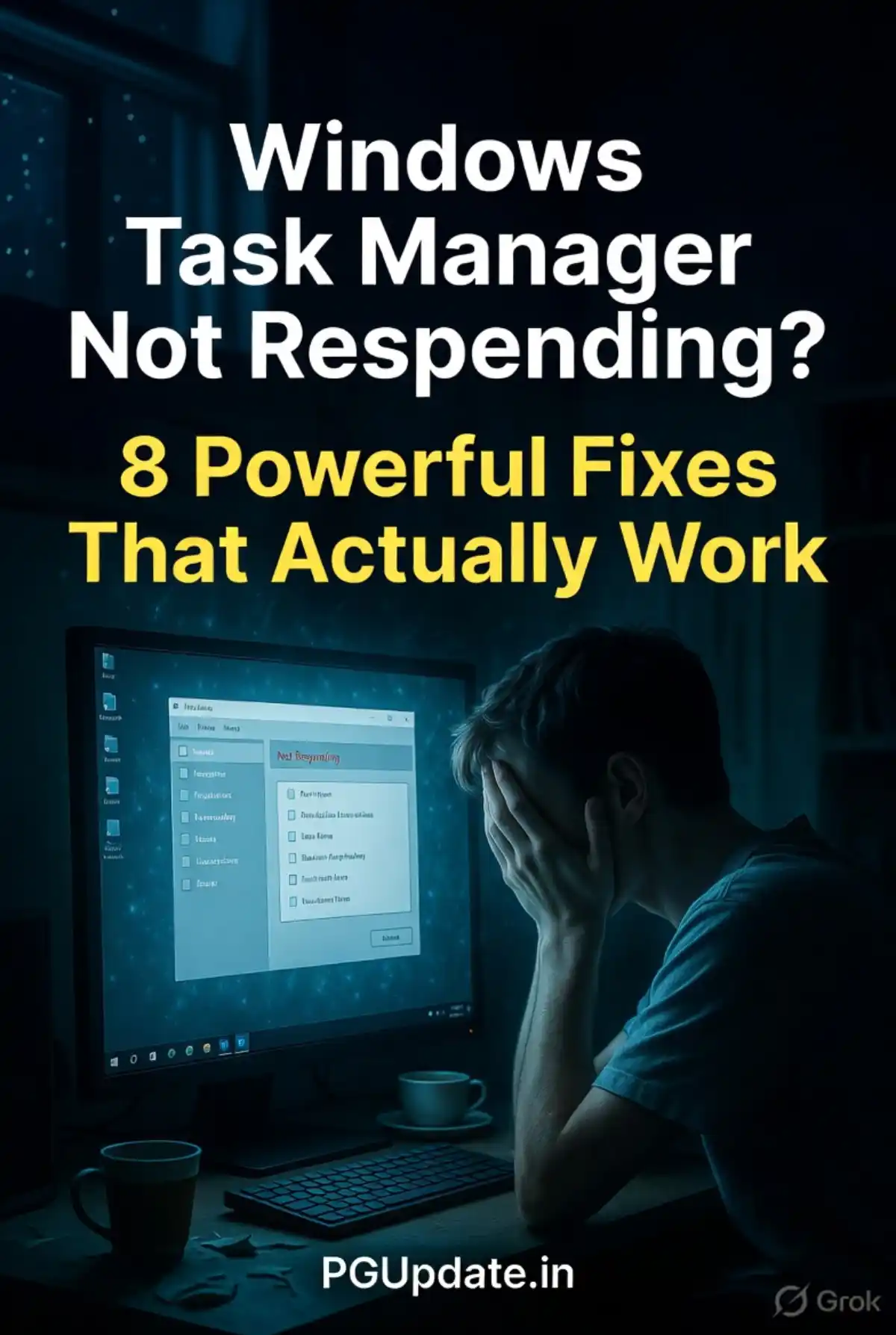
You press Ctrl + Shift + Esc — nothing happens. You right-click the taskbar and try to open Task Manager — it flickers and freezes. If Windows Task Manager is not responding, it is one of the most frustrating situations you can face, especially when your PC is already acting up and you desperately need to force-close a program or check what is eating your resources.
The good news is that this problem is almost always fixable without reinstalling Windows. This guide walks you through 8 powerful, proven fixes that work on both Windows 10 and Windows 11 in 2026.

Table of Contents
- What Is Windows Task Manager and Why Does It Stop Responding?
- Common Causes of Task Manager Not Responding
- 8 Powerful Fixes for Windows Task Manager Not Responding
- Expert Tips to Prevent Task Manager Issues
- FAQ – Frequently Asked Questions
- Conclusion
What Is Windows Task Manager and Why Does It Stop Responding?
Task Manager is one of the most important built-in tools in Windows. It lets you monitor running processes, track CPU, RAM, and disk usage, end unresponsive programs, manage startup applications, and check system performance in real time.
When Windows Task Manager is not responding, it usually means the tool itself has become corrupted, is being blocked by a policy or security setting, or the system is so overloaded that even Task Manager cannot launch properly. In some cases, malware deliberately disables Task Manager to prevent users from detecting or stopping it.


Common Causes of Windows Task Manager Not Responding
Before jumping into fixes, it helps to understand what is causing the problem in the first place:
- Task Manager disabled via Group Policy or Registry — An administrator setting or a malware infection has blocked it.
- Corrupted Windows system files — Damaged core files prevent Task Manager from launching correctly.
- High system resource usage — When CPU or RAM is maxed out, even Task Manager struggles to open.
- Malware or virus infection — Many malware strains specifically target and disable Task Manager.
- Outdated or corrupted user profile — A broken Windows profile can cause system tools to stop working.
- Windows Explorer crash — Since Task Manager depends partly on Explorer, a crashed shell can affect its launch.
- Pending Windows updates — Uninstalled updates can leave system components in a broken state.
8 Powerful Fixes for Windows Task Manager Not Responding
Fix 1: Restart Windows Explorer
A crashed or frozen Windows Explorer shell is one of the quickest causes of Task Manager becoming unresponsive. Restarting it takes less than 30 seconds.
- Press Ctrl + Alt + Delete and select Task Manager from the lock screen options (this bypasses the normal launch method).
- If Task Manager opens this way, scroll down in the Processes tab and find Windows Explorer.
- Right-click it and select Restart.
- Your taskbar will flicker briefly — that is normal. Try opening Task Manager the usual way again.
Fix 2: Re-enable Task Manager via Registry Editor
If Task Manager has been disabled — by malware, a script, or Group Policy — a specific registry key blocks it from running. Here is how to re-enable it:
- Press Windows + R, type
regedit, and press Enter. - Navigate to this path:
HKEY_CURRENT_USERSoftwareMicrosoftWindowsCurrentVersionPoliciesSystem- Look for a value named DisableTaskMgr.
- If it exists and is set to 1, double-click it and change the value to 0.
- Click OK, close the Registry Editor, and try opening Task Manager again.
If the key does not exist, Task Manager is not disabled via the registry — move on to the next fix.
Fix 3: Re-enable Task Manager via Group Policy Editor
Group Policy can also block Task Manager, especially on work, school, or domain-joined machines.
- Press Windows + R, type
gpedit.msc, and press Enter. - Navigate to: User Configuration → Administrative Templates → System → Ctrl+Alt+Del Options.
- Find the setting “Remove Task Manager”.
- Double-click it and set it to Not Configured or Disabled.
- Click Apply → OK and restart your PC.
Fix 4: Run SFC and DISM to Repair Corrupted System Files
Corrupted Windows system files are a very common hidden cause of Task Manager not responding. The built-in SFC and DISM tools will scan and repair them automatically.
- Press the Windows key, type cmd, right-click Command Prompt and choose Run as Administrator.
- Run the SFC scan:
sfc /scannow- Once it finishes, run the DISM repair:
DISM /Online /Cleanup-Image /RestoreHealth- Restart your PC when both scans complete and test Task Manager.
According to Microsoft’s official SFC documentation, this is the recommended method for repairing damaged Windows components that prevent built-in tools from working correctly.
Fix 5: Scan for Malware
Malware is one of the most notorious causes of Task Manager being disabled or frozen. Many virus and spyware infections specifically target Task Manager to prevent users from detecting or terminating the malicious process.
- Open Windows Security from the Start menu.
- Go to Virus & Threat Protection → Scan Options.
- Select Full Scan and click Scan Now.
- Allow the full scan to complete — this may take 20–60 minutes.
- Remove or quarantine any threats found, then restart and test Task Manager.
For a second opinion, you can also run Malwarebytes Free, which is well-regarded for catching threats that Windows Defender misses.
Fix 6: Create a New Windows User Account
A corrupted user profile can cause Task Manager and other system tools to malfunction only for your specific account, while working fine for other users. Testing with a new account quickly identifies whether this is the cause.
- Go to Settings → Accounts → Family & Other Users.
- Click Add Account and create a new local user account.
- Sign out of your current account and sign into the new one.
- Try opening Task Manager.
If Task Manager works perfectly on the new account, your original profile is corrupted. You can migrate your files to the new account and continue using it, or attempt a profile repair via the registry.
Fix 7: Update Windows to the Latest Version
An outdated Windows build may contain known bugs that prevent Task Manager from responding. Microsoft regularly patches these issues in monthly cumulative updates.
- Go to Settings → Windows Update.
- Click Check for Updates.
- Install all available updates, including optional driver updates.
- Restart your PC and test Task Manager.
Staying current with updates is one of the best ways to prevent system tool failures. If your updates are getting stuck, check our guide on Windows Update stuck on Pending Download to get them moving again.
Fix 8: Perform a Clean Boot to Identify Conflicting Software
A third-party app or service running in the background may be interfering with Task Manager. A Clean Boot starts Windows with only Microsoft services running, which helps identify the conflicting software.
- Press Windows + R, type
msconfig, and press Enter. - Go to the Services tab, check “Hide all Microsoft services”, then click Disable All.
- Go to the Startup tab and click Open Task Manager (if available) — disable all startup items.
- Click OK and restart your PC.
- Test Task Manager in the clean boot environment.
If Task Manager works fine after a clean boot, re-enable services and startup items in small groups until you identify the conflicting program, then uninstall or update it.

Expert Tips to Prevent Task Manager Issues in Future
- Run Windows Update regularly to keep all system components patched and stable.
- Keep your antivirus active and updated — malware disabling Task Manager is a real and common threat.
- Avoid downloading software from unofficial sources — cracked software and unofficial installers are the #1 source of malware that disables system tools.
- Monitor disk and RAM usage periodically so your system never gets overloaded to the point where Task Manager cannot open. Our guide on how to speed up Windows 11 covers the best ways to keep resources free.
- Create a system restore point before making major changes — this gives you a safe rollback if things go wrong.
For a deeper understanding of how Windows manages processes and system tools, the official Microsoft documentation on Windows Processes and Threads is an excellent technical reference.
FAQ – Frequently Asked Questions
Why is Windows Task Manager not responding when I open it?
The most common causes are Task Manager being disabled via the Registry or Group Policy, corrupted Windows system files, malware infections, or an overloaded system where resources are too exhausted to launch another process. Start with Fix 1 and Fix 2 above for the fastest resolution.
How do I open Task Manager when it is not responding normally?
Try pressing Ctrl + Alt + Delete and selecting Task Manager from the options screen — this uses a different launch path that often bypasses the issue. You can also open it via Command Prompt by typing taskmgr and pressing Enter.
Can malware cause Task Manager to stop working?
Yes — this is actually a very common malware behaviour. Many viruses and spyware programs specifically disable Task Manager and other system tools like Registry Editor to prevent users from detecting or terminating the malicious process. Running a full malware scan (Fix 5) should be a priority if the registry fix alone does not resolve the issue.
Does updating Windows fix Task Manager not responding?
Yes, in many cases. Certain Windows builds contain known bugs that affect system utilities including Task Manager. Installing the latest cumulative updates via Windows Update often patches these bugs completely.
Is it safe to edit the registry to fix Task Manager?
Yes, the specific registry change described in Fix 2 is safe and only modifies a single value that controls whether Task Manager is enabled. Always back up your registry before making changes: in Registry Editor, click File → Export to save a full backup before proceeding.
Conclusion
A Windows Task Manager not responding situation is stressful — especially when you need it most. But as you have seen, there are clear, proven solutions for every cause. Most users will resolve the issue with Fix 1, Fix 2, or Fix 4 alone.
Start with the quickest options first: restart Windows Explorer, check the DisableTaskMgr registry key, and run SFC. If those do not work, scan for malware and perform a clean boot to hunt down any third-party conflicts. Work through the list and your Task Manager will be back up and running in no time.
Do not let a broken system tool hold you back — apply these fixes today and restore full control of your Windows PC.
Key Takeaways
- Windows Task Manager not responding is most often caused by a registry or Group Policy restriction, corrupted system files, or malware.
- Use Ctrl + Alt + Delete as an alternative way to access Task Manager when the normal shortcut fails.
- Check and correct the DisableTaskMgr registry value — this alone resolves the issue for a large number of users.
- Running
sfc /scannowand DISM repairs any underlying Windows corruption that may be blocking Task Manager. - A full malware scan is essential if registry and system file repairs do not resolve the problem.