If your Windows Group Policy changes are not applying immediately, the gpupdate /force command is the fastest solution. Whether you are a Windows administrator or a regular user trying to apply updated policies right away, this complete guide covers everything you need to know about the gpupdate command in 2026.

What Is the GPUpdate Command?
The gpupdate command is a built-in Windows utility that manually refreshes Group Policy settings on your local computer or across a network. By default, Windows refreshes Group Policy automatically every 90 minutes. However, when you need changes applied immediately, you run gpupdate from Command Prompt or PowerShell.
It applies to all modern Windows versions including Windows 10, Windows 11, Windows Server 2016, 2019, 2022, and 2025.

GPUpdate vs GPUpdate /Force — What’s the Difference?
| Command | What It Does | When to Use |
|---|---|---|
gpupdate |
Applies only policies that have changed since last refresh | Routine refresh after minor GPO changes |
gpupdate /force |
Reapplies ALL policies regardless of whether they changed | Troubleshooting, urgent policy enforcement |
GPUpdate Command Syntax
gpupdate [/target:{computer | user}] [/force] [/wait:VALUE] [/logoff] [/boot] [/sync]All GPUpdate Switches Explained
| Switch | Description |
|---|---|
/force |
Reapplies ALL Group Policy settings, even unchanged ones |
/target:computer |
Updates only computer policy settings |
/target:user |
Updates only user policy settings |
/wait:VALUE |
Sets how many seconds to wait (default: 600 seconds, -1 = wait forever) |
/logoff |
Logs off user after update (for policies requiring logoff) |
/boot |
Restarts PC after update (for policies requiring reboot) |
/sync |
Forces synchronous foreground policy refresh at next logon/boot |
How to Run GPUpdate /Force on Windows 11 and 10
Follow these simple steps:
- Press Win + S and search for Command Prompt
- Right-click it and select Run as Administrator
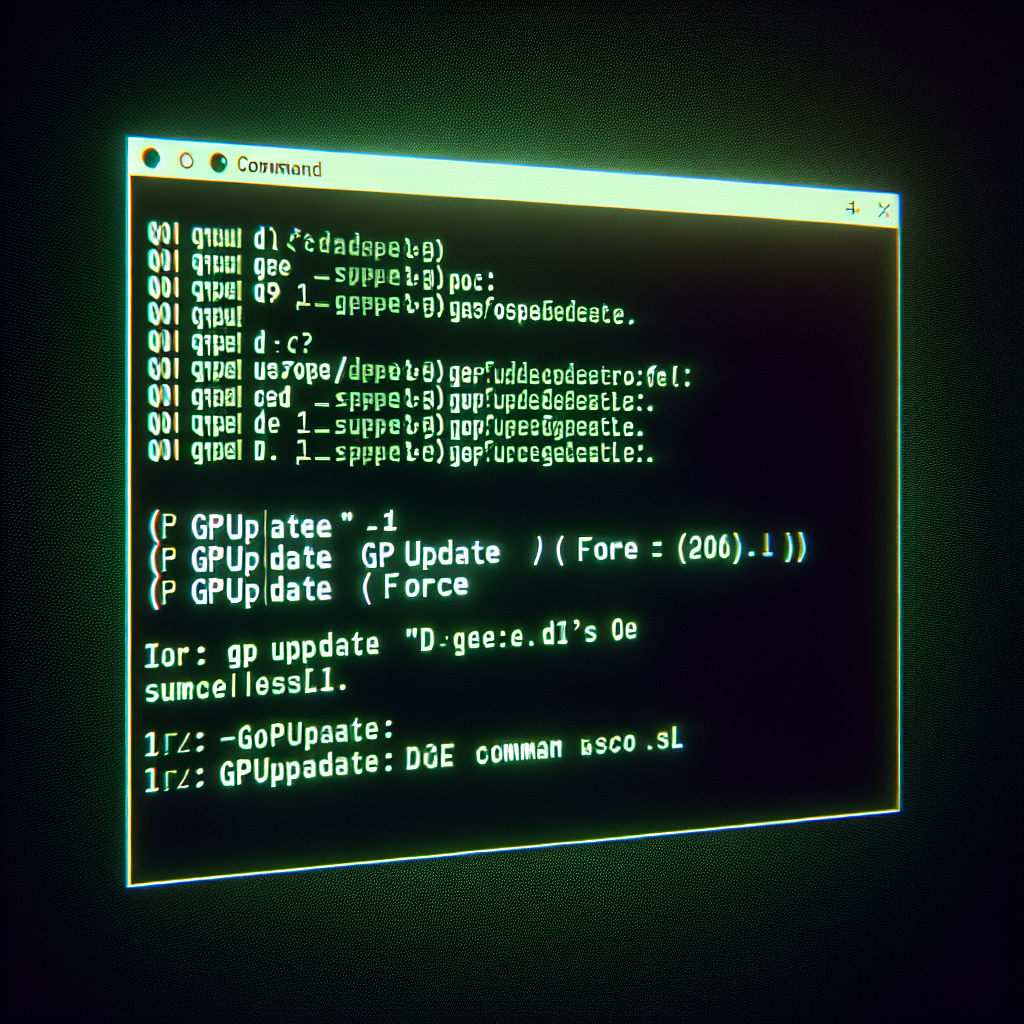
- Type the following command and press Enter:
gpupdate /force- Wait for the confirmation message:
Computer Policy update has completed successfully.
User Policy update has completed successfully.
That’s it! Both computer and user policies are now refreshed instantly.

GPUpdate /Force Examples
1. Update Only Computer Policies
gpupdate /target:computer /forceUse this when you’ve changed computer-level GPOs (firewall rules, software restrictions).
2. Update Only User Policies
gpupdate /target:user /forceUse this when you’ve changed user-level GPOs (desktop settings, drive mappings).
3. Force Update and Log Off
gpupdate /force /logoffAutomatically logs off the current user after update — needed for folder redirection policies.
4. Force Update and Restart
gpupdate /force /bootRestarts the PC after update — required for software installation policies.
5. Wait Indefinitely for Slow Networks
gpupdate /force /wait:-1Prevents timeout on slow networks or when many GPOs are being processed.
How to Run GPUpdate on a Remote Computer
For remote computers, use PowerShell with the Invoke-GPUpdate cmdlet:
Invoke-GPUpdate -Computer "ComputerName" -RandomDelayInMinutes 0 -ForceRequirements: Windows Server 2012 or later, WinRM enabled, and admin rights on the remote machine.
You can also update all computers in an Organizational Unit (OU) from the Group Policy Management Console (GPMC) — right-click the OU and select Group Policy Update.
How to Verify Group Policy Was Applied
After running gpupdate /force, confirm the policies applied correctly using:
gpresult /rFor a detailed HTML report:
gpresult /h C:GPReport.htmlOpen the HTML file in your browser to see every applied GPO, including which ones succeeded or failed.
Common GPUpdate Errors and Fixes
Error: “Access Denied”
Cause: Not running Command Prompt as Administrator.
Fix: Always right-click CMD and choose "Run as Administrator" when updating computer policies.
Error: GPUpdate Hangs or Takes Too Long
Cause: Slow network connection to domain controller, too many GPOs, or DNS issues.
Fix: Run gpupdate /force /wait:1800 to extend timeout. Check network connectivity to DC.
Error: “The Processing of Group Policy Failed”
Cause: Domain controller unreachable or DNS not resolving correctly.
Fix: Run nslookup yourdomain.com to verify DNS. Check Event Viewer under Applications and Services Logs → Microsoft → Windows → GroupPolicy → Operational.
Policy Not Applying After GPUpdate
Cause: Some policies (folder redirection, software installation) require logoff or reboot.
Fix: Use gpupdate /force /logoff or gpupdate /force /boot as needed.
Does GPUpdate /Force Require a Reboot?
In most cases, no reboot is needed. However, certain policies — like software installation via Group Policy or folder redirection — can only apply during startup or user logon. In those cases, gpupdate /force will prompt you to restart or log off.
Key Takeaways
gpupdaterefreshes only changed policies;gpupdate /forcereapplies all policies- Always run as Administrator for computer policy updates
- Use
gpresult /rto verify policies applied correctly - For remote computers, use
Invoke-GPUpdatein PowerShell - Most policy changes apply without a reboot — except software installation and folder redirection
For more Windows troubleshooting guides, visit PGUpdate.in — your trusted source for Windows fixes and PC tips. You may also find our guide on how to fix Windows 11 not updating useful, or learn how to update Windows apps via PowerShell.
Frequently Asked Questions
What does gpupdate /force do?
It forces Windows to immediately reapply ALL Group Policy settings, even those that haven’t changed since the last refresh — bypassing the default 90-minute automatic refresh cycle.
Do I need admin rights to run gpupdate?
For user policies, no. For computer policies, yes — you must run Command Prompt as Administrator.
How long does gpupdate /force take?
On a local computer, it typically completes within a few seconds. On slow networks with many GPOs, it can take several minutes.
Can gpupdate /force break anything?
No, it simply reapplies existing Group Policy settings. It does not change or delete any policies — it only refreshes what’s already configured.
What is the difference between gpupdate and gpresult?
gpupdate refreshes Group Policy settings; gpresult reports which policies are currently applied. Use them together — run gpupdate first, then gpresult to verify.
How do I run gpupdate on a remote PC?
Use PowerShell: Invoke-GPUpdate -Computer "PCName" -RandomDelayInMinutes 0 -Force. Requires WinRM enabled and admin rights on the remote machine.